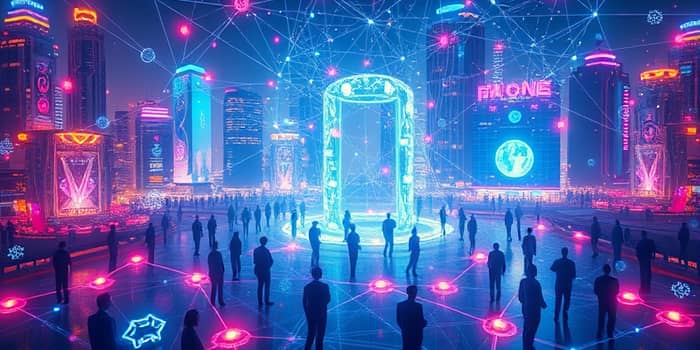
We are witnessing a profound shift in how we interact, transact, and create online. As the digital era evolves beyond static pages and centralized platforms, Web3 emerges as a powerful beacon of transformation. This article explores the key trends, regional dynamics, challenges, and practical pathways to harnessing a truly decentralized and transparent future.
By 2030, the global Web3 market is forecasted to hit USD 81.5 billion with a 43.7% CAGR. Separately, the Web3 and Blockchain Technology sector will expand from US$ 5.62 billion in 2024 to over US$ 109 billion by 2032 at a 44.9% CAGR. These figures underscore the monumental potential awaiting businesses, creators, and communities.
At its core, Web3 reshapes the internet through blockchain, tokenization, and distributed networks. It empowers users with true ownership of digital assets, peer-to-peer value exchange, and cryptographic identities. Gone are the days of intermediaries controlling data; instead, communities govern themselves via open protocols.
This paradigm rests on several pillars:
As we move into 2026, several forces converge to make Web3 not just a buzzword but an integral part of everyday life.
Web3’s expansion shows distinct regional flavors, reflecting localized needs and regulatory stances.
In North America, enterprises lead in DeFi solutions, digital identity systems, and large-scale blockchain integrations. Giants in finance are bridging TradFi with tokenized assets, while startups innovate in SocialFi and gaming.
Asia-Pacific stands out for rapid deployments in China, India, and South Korea. Here, blockchain powers supply chain transparency, digital payment rails, and immersive metaverse experiences. Government-backed pilots in Japan and Southeast Asia further accelerate adoption.
Europe excels in enterprise blockchain applications for industrial IoT, public-sector transparency, and fintech innovation. The UK’s favorable regulatory sandbox attracts Web3 startups, while Germany and Spain focus on sustainability tracking and borderless recruitment.
Meanwhile, the Middle East & Africa region emerges as a fintech hub. Rapid mobile payment growth, infrastructure investments, and cross-border remittance pilots are laying the foundation for large-scale Web3 use cases.
Despite enthusiasm, Web3 must address several hurdles:
By 2026, these efforts will transform hype into practical, utility-driven infrastructure. Enterprises will quietly integrate blockchain into supply chain management, HR automation, and secure data sharing — while end-users enjoy invisible ledger technology in everyday apps.
Transitioning to Web3 may seem daunting. Here are actionable strategies:
Looking forward, several developments will define Web3’s next chapter:
In early 2026, enterprises will deploy scalable Layer 2 networks to slash transaction costs and harness blockchain for secure data sharing. Decentralized AI marketplaces will emerge, combining verifiable data sources with smart contracts to combat misinformation. Autonomous, AI-driven DAOs will optimize decision-making and resource allocation.
SocialFi platforms will expand, empowering creators and communities to monetize content through token economies, NFTs, and token-gated access. The creator economy will evolve beyond one-time sales to royalty-based, perpetual streams of income.
On the job front, demand for blockchain architects, smart contract auditors, and community managers will skyrocket. Educational bootcamps and university courses will proliferate, preparing the workforce for a new era of decentralized innovation.
The journey to Web3’s full potential is a collective endeavor. As enterprises adopt invisible blockchain services, creators build immersive metaverse experiences, and regulators craft clear guidelines, we move closer to an internet that is open, inclusive, and secure.
By embracing experimental pilots, prioritizing user experience, and fostering cross-industry collaboration, every stakeholder can play a part in shaping a vibrant, trustworthy digital future. The next generation of the internet awaits — and with it, unprecedented opportunities for innovation, growth, and human connection.
References