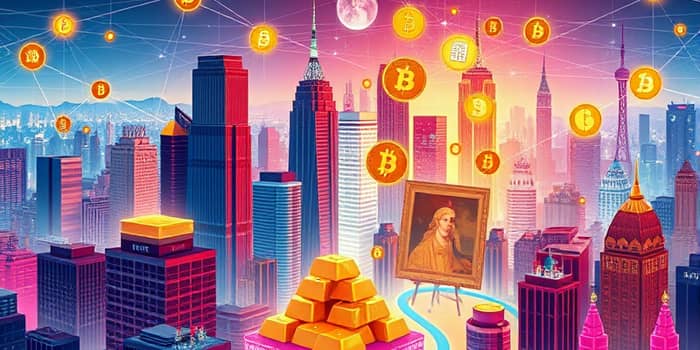
In an era defined by digital transformation, the tokenization of assets is poised to revolutionize how we perceive ownership and value. By harnessing the power of blockchain technology, individuals and institutions can unlock opportunities that were once confined to traditional financial systems.
From art collections to real estate, the concept of representing tangible and intangible assets as digital tokens is more than an innovation—it’s a movement towards greater inclusivity, transparency, and efficiency in global markets.
At its core, asset tokenization involves converting ownership rights of physical, financial, or intangible items into digital tokens on a blockchain. This process creates a secure, immutable record of ownership, enabling fractional ownership of high-value assets and eliminating many legacy inefficiencies.
Whether dealing with real estate deeds, fine art pieces, or carbon credits, tokens act as digital certificates or “wrappers,” facilitating peer-to-peer trading and programmable compliance. By embedding rules directly into smart contracts, tokenized assets become more versatile and adaptable than ever before.
The promise of tokenization lies in its ability to transform illiquid holdings into readily tradable instruments. No longer do investors need to wait for infrequent auctions or endure complex settlement processes.
By offering permissionless, 24/7 peer-to-peer trading and on-chain immutability and transparency, markets become more resilient and democratic. Small investors can now participate in asset classes that were once reserved for large institutions.
Launching a tokenization project involves several critical stages, each ensuring legal compliance and technical robustness. The following overview highlights the essential workflow.
Each step is fortified by programmable compliance and auditing protocols, ensuring that the digital representation faithfully mirrors the rights and obligations of the underlying asset.
Across industries, tokenization is already making waves. Financial institutions experiment with tokenized bonds and equities, offering investors instant access to diversified portfolios.
In real estate, developers fractionalize property ownership, allowing individuals to invest in luxury apartments or commercial buildings with minimal capital outlay. Art galleries and private collectors use NFTs to share provenance while maintaining custody of priceless works.
Despite its immense promise, tokenization faces hurdles that demand careful navigation. Regulatory frameworks vary widely across jurisdictions, requiring adaptable solutions that can satisfy local compliance requirements without stifling innovation.
Technical challenges include ensuring reliable oracle data for off-chain assets and securing custodial arrangements for physical holdings. Smart contract vulnerabilities and platform fragmentation also pose potential risks.
Institutions must balance the cost of legal structuring and technology integration against the anticipated benefits, often starting with higher-value assets to justify initial investments.
As global markets embrace digital assets, the potential for tokenization to reshape capital flows is unparalleled. Industry leaders predict trillions of dollars in real-world value moving on-chain, unlocking unprecedented levels of liquidity and participation.
Decentralized finance (DeFi) protocols are integrating tokenized assets as collateral, while governments explore central bank digital currencies (CBDCs) to modernize monetary policy. From academic research to boardroom strategies, stakeholders recognize that tokenization will democratize access to valuable assets and redefine traditional investment paradigms.
The journey of asset tokenization is still in its early chapters, but its trajectory points toward greater financial inclusion, operational efficiency, and market transparency. By embracing this paradigm shift, we can collectively build a future where trust is embedded in code, and value is accessible to everyone.
transform inefficiencies into seamless experiences and join the movement that is bridging the gap between the physical and digital realms of wealth.
References