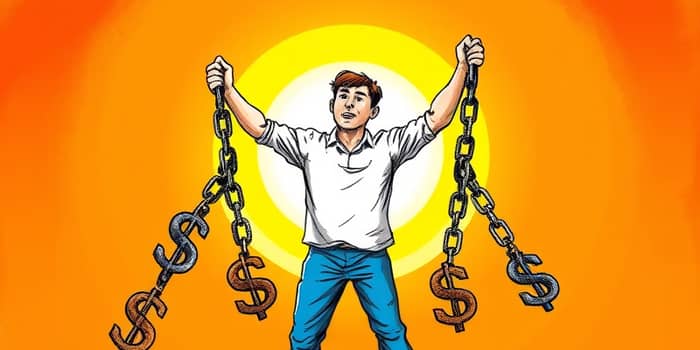
Debt can feel like invisible shackles around our minds, creating a silent storm of emotions and worries. Beyond numbers on a statement, it seeps into our daily lives, eroding well-being and straining relationships. Yet understanding its psychological pathways can empower us to reclaim control.
In this in-depth exploration, we uncover the direct and hidden impacts of debt, demographic influences, and evidence-based strategies to break the cycle. Drawing on empirical studies and real-world data, we illuminate both the chains and the keys to freedom.
The stress process model reveals how debt operates as a constant stressor, directly linked to depression, anxiety, and anger. These reactions often arise with little warning, flaring up at billing notices or late-payment fees.
Beyond immediate stress, debt undermines our sense of agency. Research highlights eroded sense of personal control and straining of social bonds, magnifying distress over time.
Emotional responses such as shame and fear of default add layers of suffering. Unsecured, high-interest debt can trigger feelings of institutional betrayal and shame, making it hard to seek help.
Quantitative studies underscore the breadth of debt’s impact. Individuals with debt are three times more likely to experience serious mental health issues. Nearly half of respondents who cite money as their top stressor identify debt as the culprit.
Key findings include:
Longitudinal data from the MIDUS study (1995–2014) show that debt correlates with declines in psychological and social well-being, mediated by financial satisfaction. Interestingly, regions with higher bankruptcy rates see a slight buffer effect, suggesting social norms can mitigate stress.
The Miami Disability Study (n=1,463) provides compelling regression results:
These figures demonstrate that debt remains a unique predictor of emotional distress even after controlling for socioeconomic factors. Mastery significantly mediates these effects, whereas social support plays a smaller role.
For many young adults, educational aspirations come with a hidden cost. Student loans may offer future benefits, but they also foster prolonged stress. Surveys report that one‐third of borrowers feel persistent anxiety about loan payments.
These pressures coincide with major life transitions—entering the workforce, forming relationships—but debt denial and account aversion often prevent timely intervention.
Moreover, younger debtors typically possess lower financial literacy, exacerbating cycles of avoidance. Without clear guidance, they may juggle minimum payments, miss deadlines, and intensify shame.
Escaping debt’s psychological grip requires both practical steps and mindset shifts. Drawing on evidence from policy reports and behavioral experiments, consider these approaches:
Integrating these strategies can interrupt harmful cycles of avoidance. For instance, scheduling automated payments reduces account aversion, while open conversations with friends or mentors ease emotional burdens.
While existing research illuminates critical pathways, limitations persist. Many studies use binary debt measures, overlooking nuances of amount and interest rate. Cross-sectional designs restrict causal inference, and mediation analyses often omit long-term follow-up.
Future research should compare the psychological impacts of predatory versus “good” debt, examine cultural differences in social norms, and test interventions in randomized trials.
Debt’s psychological impact extends far beyond financial spreadsheets, weaving into our emotions, relationships, and sense of self. Yet data also shows that empowerment is within reach. By combining practical financial tools, supportive networks, and deliberate mindset changes, we can dismantle the chains of debt.
Take that first brave step—whether it’s reviewing your budget, talking to a counselor, or confiding in a friend—and begin reclaiming your peace of mind. Liberation from debt starts with the unwavering belief that you deserve a life unburdened by invisible weights.
References