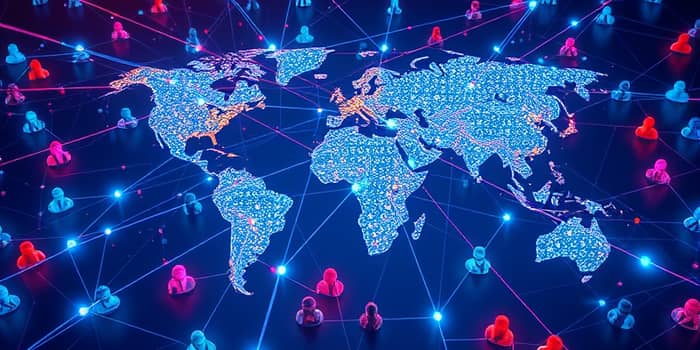
Social media is evolving. Across the digital landscape, a new model is emerging—one that returns power to individuals and communities. Decentralized social networks promise to reshape how we connect, share, and govern our online lives.
Decentralized social networks, often called DeSoc, operate without a central authority. Instead of relying on a single corporation to host data, they run on peer-to-peer systems and blockchain or distributed ledger frameworks. Thousands of independent nodes around the world store and validate content, creating a resilient ecosystem.
Users maintain user-owned identities and data through blockchain or federated protocols. This shift allows individuals to carry their profiles, connections, and content across platforms, unshackled from the traditional gatekeepers.
Since their inception, social media giants have amassed power by controlling user data, content visibility, and advertising dollars. While this model enabled rapid growth, it introduced significant risks:
Data breaches and privacy scandals eroded trust as millions of user records were exposed. Platforms prioritized ad revenue over user well-being, deploying opaque algorithms that manipulated feeds and emotions.
Content moderation became a tug-of-war — either heavy-handed censorship or the proliferation of hate speech and misinformation. Meanwhile, a single outage or policy shift could affect hundreds of millions overnight.
At the heart of DeSoc lies a technical tapestry woven from blockchain, federated servers, and open protocols:
These components work in concert to deliver a platform that is resistant to outages, censorship, and single points of failure.
Moving away from centralized control unlocks a suite of advantages for individuals, communities, and developers:
Decentralization is not a silver bullet. Early adopters must navigate several hurdles:
Developers and communities are actively addressing these issues through improved interfaces, federation tools, and educational initiatives.
A new generation of DeSoc platforms is demonstrating the potential of this model. Below is a snapshot of notable projects:
Decentralized social networks are gaining momentum as users grow weary of data misuse and algorithmic manipulation. Recent studies show that communities on DeSoc platforms exhibit more authentic, emotionally rich interactions compared to traditional social media.
Advancements in protocol interoperability promise a future where your social graph, identity, and content flow seamlessly between services. This opens the door to democratic, transparent social spaces where merit and community engagement determine visibility.
Emerging governance models—powered by smart-contract DAOs—offer communities the reins to craft policies, resolve disputes, and allocate resources with unprecedented fairness and accountability.
The promise of decentralized social networks lies in returning control to individuals and communities. By shedding centralized gatekeepers, these platforms enable a more private, secure, and inclusive digital future.
While challenges remain, the progress of projects like Mastodon, Farcaster, and Bluesky underscores a profound shift in how we collaborate and communicate online. As adoption grows, so will the tools and interfaces that make decentralization accessible to all.
Now is the moment to explore, contribute, and support the DeSoc movement. Together, we can build a resilient, user-centric social landscape—one where freedom, privacy, and community thrive above all.
References