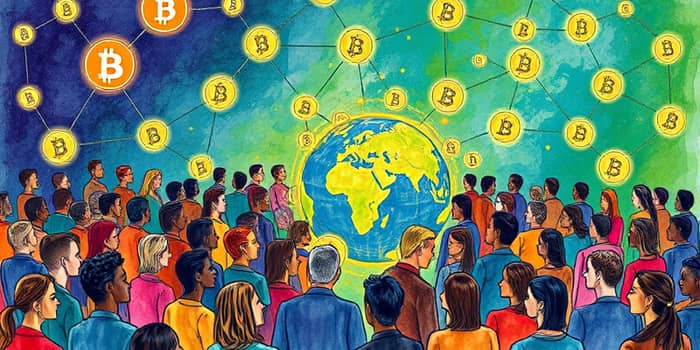
Decentralized Autonomous Organizations (DAOs) are reshaping how communities unite to make decisions, manage resources, and foster innovation without centralized leadership. By harnessing blockchain technology, DAOs empower individuals across the globe to collaborate with unprecedented transparency and fairness.
At their essence, DAOs operate as a software system implemented as smart contracts. These contracts execute predefined rules automatically on a blockchain, eliminating manual oversight and central authority.
Unlike traditional firms led by executives and boards, DAOs rely on a flattened structure where every member with tokens can contribute to governance. Key structural components include:
DAOs employ varied governance frameworks to balance inclusivity with efficiency. They aim to engage broad membership while preventing gridlock or centralization. Some prevalent models are:
These mechanisms illustrate a spectrum from fully public decision-making to delegated, council-led processes. Each DAO tailors its approach to community size, mission, and complexity.
DAOs have proven their versatility across finance, infrastructure, community funding, and more. Protocol DAOs power leading DeFi platforms:
Beyond finance, DAOs enable novel initiatives in art, community grants, and investment clubs. For example, the Bored Ape Yacht Club leverages a DAO to coordinate member events and treasury allocation.
Historical lessons enrich current practice. "The DAO" experiment in 2016 showcased both promise and pitfalls. Coded curators screened proposals, yet unintended centralization of curator power led to vulnerability. Despite its hack and dissolution, the project catalyzed improvements in security audits, multi-signature councils, and clearer constitution drafting.
A milestone merger between Fei Protocol and Rari Capital in 2021 demonstrated high-level DAO collaboration. Token-holders voted to unify governance tokens, aligned incentives, and offered dissenting members an exit option. This illustrates token holders can delegate their votes or choose independent paths.
While DAOs herald a shift towards egalitarian governance, they face persistent hurdles:
Addressing these issues requires ongoing experimentation. Solutions include progressive decentralization roadmaps, careful token release schedules, transparent reporting dashboards, and education drives to foster informed participation.
Looking ahead, DAOs may integrate cross-chain governance, decentralized identity verification, and on-chain reputation systems. Decision-making authority over day-to-day affairs will likely blend automated execution with human-led oversight, refining trust models and resilience.
DAOs embody a vision where communities collectively steer projects, share risks, and equitably distribute rewards. They invite individuals worldwide to contribute expertise, capital, and creativity toward shared goals.
Consider joining or launching a DAO to experience governance reimagined: from core developers crafting code, to token-holders casting pivotal votes, every participant shapes the organization’s destiny. By embracing transparency, automation, and collaborative spirit, DAOs pave the way for more inclusive, responsive, and trustworthy institutions.
As this landscape evolves, continued dialogue between technologists, legal scholars, economists, and community members will refine best practices. Together, we can build DAOs that not only move assets but also uplift voices and strengthen global cooperation.
Decentralized Autonomous Organizations are more than code and tokens; they are living ecosystems of shared purpose. Their power lies in transforming governance from gated rooms into open arenas, where every stakeholder holds a key. Step into this new era of collective agency, and help shape the future of governance—transparent, inclusive, and bound only by our collective imagination.
References