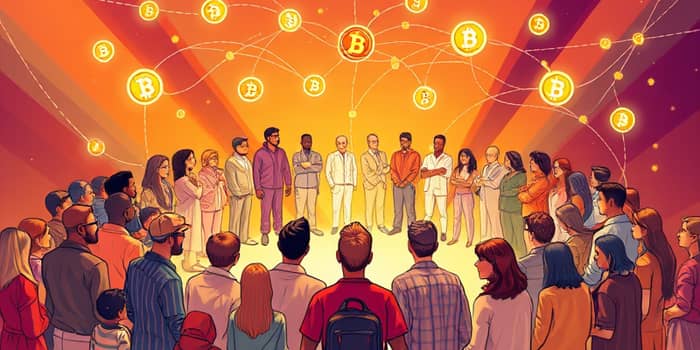
In recent years, a profound shift has occurred in how creators monetize their work and engage with audiences. At the heart of this transformation are social tokens - digital assets that flourish on blockchain networks such as Ethereum, Polygon, and Solana. These tokens enable decentralized, secure, transparent value exchange and empower creators to retain full control of revenue streams while fostering deeper bonds with their communities.
By 2026, the creator economy is valued at an astonishing USD 203.6 billion, signaling an era where audiences become investors, participants, and co-owners in creative ventures. This article explores the multifaceted impact of social tokens, tracing their evolution, mechanics, market trends, and the promises and pitfalls that lie ahead.
The creator economy originated in the era of centralized social platforms, where revenue was dominated by advertising splits and subscription fees. Platforms like YouTube and Instagram provided scale but demanded significant cuts and imposed restrictive policies, limiting how creators could engage and monetize.
With the rise of Web3 technologies around 2021, visionaries began exploring decentralized models. Early experiments with nonfungible tokens (NFTs) and decentralized autonomous organizations (DAOs) paved the way for social tokens. These assets reframed followers not merely as passive audiences but as stakeholders, ushering in a new chapter of shared ownership and collaborative growth.
At their core, social tokens are minted on blockchain platforms and distributed by creators or communities. Each token represents a claim on value—ranging from exclusive content and merchandise to governance rights in a DAO. Fans purchase, earn, or are rewarded with tokens through participation and contributions.
Token holders can unlock curated benefits: private chats, early access to releases, or voting power over project directions. This direct fan payments without intermediaries model aligns incentives, as creators reward meaningful engagement and fans gain tangible influence over creative outcomes.
The global creator economy’s 2026 valuation of USD 203.6 billion reflects explosive growth. Projections by Goldman Sachs place the market at USD 480 billion by 2027, and SNS Insider forecasts a staggering USD 1.18 trillion by 2032, driven by a 24.6% compound annual growth rate.
Within this ecosystem, 48% of creators operate solo, while 88% monetize via memberships. AI tools empower 75% of creators for content production, and 68% plan further AI adoption. Membership pricing skews toward $26–$50 per month for 32.9% of communities, emphasizing the shift to recurring revenue and ownership over viral metrics.
Contrasting legacy structures with tokenized frameworks reveals fundamental differences in control, engagement, and rewards. Below is a concise comparison:
This side-by-side highlights how tokenized models reduce platform dependency and embed fans as active partners in growth and innovation.
The rise of social tokens brings transformative advantages for creators and audiences alike. By fostering community empowerment and shared ownership, these tokens convert casual followers into invested stakeholders whose success directly benefits the creator.
Use cases span from exclusive digital art drops and limited merchandise to private virtual meetups and DAO-driven roadmaps. Such models leverage incentive structures align interests between creators and supporters, catalyzing vibrant ecosystems that thrive on trust, transparency, and mutual growth.
Despite their promise, social tokens also introduce complexities. Early adopters must navigate token value volatility and uncertainty, as speculative trading can obscure genuine utility. Regulatory frameworks remain in flux, potentially affecting token issuers and holders alike.
Looking ahead, the integration of AI-driven insights and the proliferation of community-led platforms suggest a promising path. By 2032, forecasts surpass USD 1 trillion, highlighting sustained demand for direct creator support and participatory economies.
Social tokens mark a pivotal evolution in the creator economy. They strip away intermediaries, center communities, and distribute ownership in ways previously unimaginable. As we stand on the brink of this new digital frontier, creators and fans alike are empowered to co-create, co-own, and co-thrive.
By embracing inclusive, owner-driven digital economies, we foster resilience, innovation, and shared prosperity. The journey has only begun, and those who harness the potential of social tokens will be the architects of tomorrow’s creative landscape.
References