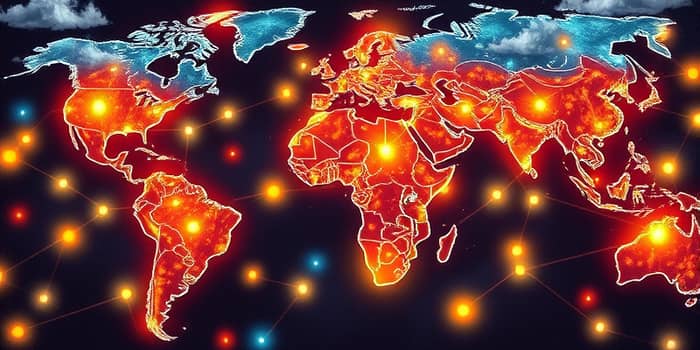
In our rapidly evolving world, financial systems resemble a vast mesh of pathways, where credit, liquidity, and confidence flow ceaselessly from one institution to another. This web, often unseen, becomes a conduit for both prosperity and peril.
At its core, financial interconnectedness forms a network of credit exposures, trading links, and dependencies among banks, funds, and infrastructure providers. These relationships include:
When every entity is both creditor and debtor, the shock of one failure can transmit rapidly across borders. The 2008 Lehman insolvency serves as a stark reminder: one institution’s collapse triggered widespread market panic and liquidity freezes.
Credit contagion travels through four principal routes:
This complex interplay resembles a domino effect: initial losses amplify as they ricochet through counterparty networks.
While traditional banks dominate headlines, modern vulnerabilities lurk in shadow corners:
Layered atop these financial risks are climate shocks—physical damage from floods or droughts and transition losses from stranded fossil fuel assets. Commodity-reliant economies can face sovereign credit downgrades and currency pressures in rapid succession.
In response to past crises, regulators implemented higher capital buffers for systemic exposures and introduced stringent liquidity coverage ratios. Key initiatives include:
To bolster defenses, authorities advocate enhanced transparency of shadow exposures, cross-border coordination of liquidity backstops, and robust stress tests incorporating climate and cyber scenarios.
Interconnectedness extends beyond banking. Consider international electricity grids: linking low-cost renewable sources can reduce energy prices, but cross-border dependencies raise governance and cybersecurity challenges. Just as a disrupted payment hub can stall trades, a compromised grid segment can trigger widespread blackouts.
These parallels illuminate universal truths: networks deliver efficiency but demand vigilant oversight. Whether in finance or infrastructure, stakeholders must map linkages, identify concentration points, and build redundancies.
Facing a world of mounting uncertainties—from geopolitical rifts to pandemics—the path forward rests on three pillars:
By embracing these principles, financial institutions and regulators can transform vulnerabilities into strengths. Real-time monitoring, diversified funding sources, and cross-industry collaboration will fortify the global grid against cascading failures.
Ultimately, interconnected credit risks are not inevitable catastrophes but challenges to be managed. With deliberate policies, technological innovation, and a commitment to shared resilience, we can harness the benefits of connectivity while safeguarding against the next shock.
As stewards of the global financial network, every leader, risk manager, and policymaker holds a piece of the solution. Together, we can weave a more robust grid—one that empowers sustainable growth, weathers crises, and elevates the collective well-being of societies around the world.
References