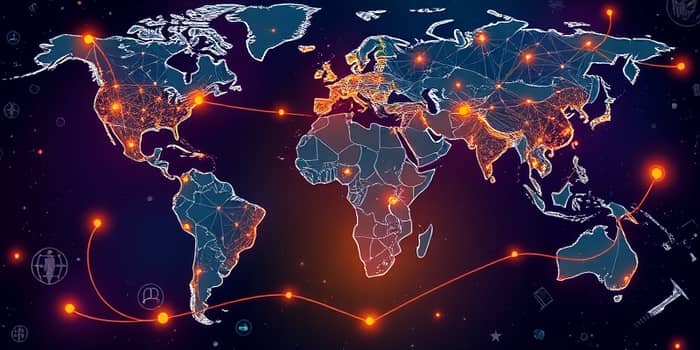
In an era defined by structural decoupling in emerging tech and multipolar tensions reshaping global alliances, investors are navigating a world where politics and markets intertwine more closely than ever. The year 2026 presents a complex tapestry of conflicts, policy shifts, and alliance-building efforts that will shape asset returns and risk profiles across regions. By understanding these forces and adopting scenario planning and flexibility techniques, individuals and institutions can position portfolios for resilience and long-term growth.
Globalization has given way to a resilience-focused approach as nations prioritize national security and supply-chain independence. Tariffs have become geostrategic tools, alliances are redefined around critical minerals and technology standards, and defense spending surges in response to mounting threats. Investors who grasp this shift can capitalize on emerging trends rather than being blindsided by sudden shocks.
As power centers diversify, the US-China great power competition remains the central axis of tension. Yet, ongoing conflicts in Ukraine, the Middle East, Venezuela, and the Arctic underscore that enduring uncertainty and volatility ahead is the new normal. Recognizing how these dynamics influence inflation, growth, and sector performance is key to crafting robust investment strategies.
The Ukraine-Russia war continues to stress European energy supplies and defense budgets, creating opportunities in military technology and infrastructure rebuilding. In the Middle East, Saudi-Israel normalization talks could unlock reconstruction and trade prospects, while potential leadership changes in Iran may reshape regional risk calculations. Venezuela’s political volatility drives Western Hemisphere security priorities, influencing energy markets and private-sector engagement.
Meanwhile, US-China tensions manifest in targeted tariffs on semiconductors, biotech, and AI research, prompting firms to diversify manufacturing and R&D across Southeast Asia, India, and Latin America. Investors should monitor government incentives and allied trade pacts as companies seek critical mineral alliances for resilient supply chains outside China’s sphere.
Across major economies, policymakers view trade and technology through a national security lens. The US has increased tariffs sixfold in twelve months, linking carve-outs to strategic investment commitments. Europe counters Chinese overcapacity in renewables and semiconductors with its own trade measures, while forging new deals with Mercosur, Indonesia, and India to secure markets for its industrial base.
Defense spending is rising globally, especially in Europe, where multibillion-euro funds support domestic military modernization. Private sector partnerships for infrastructure and tech development are proliferating, backed by government funding and favorable regulations. This emerging model positions governments as active market participants rather than passive regulators.
Each region faces unique drivers shaping investment landscapes and geopolitical risks. Understanding these nuances allows for targeted allocations and timing decisions that outperform broad benchmarks.
As governments step onto center stage in the global economy, the role of investors evolves from passive beneficiaries of market trends to proactive navigators of geopolitical undercurrents. By building enduring geopolitical muscle and incorporating policy-driven investment themes for resilience, portfolios can thrive amid uncertainty and volatility.
Today’s world offers unprecedented challenges—and unparalleled chances to uncover alpha. Those who anticipate conflicts, embrace multipolarity, and marry rigorous analysis with creative scenario planning will lead the next generation of successful investors. The path forward demands vision, adaptability, and the courage to invest with global awareness.
References