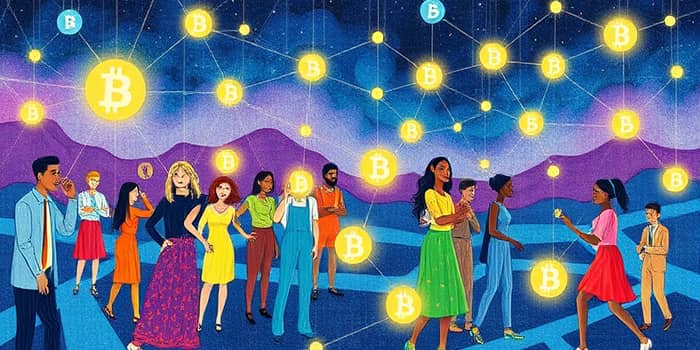
Decentralized Autonomous Organizations (DAOs) represent a groundbreaking shift in how individuals band together to achieve common goals. By leveraging blockchain technology and smart contracts, DAOs dismantle traditional corporate hierarchies and empower members through transparent, code-driven governance.
At their essence, DAOs are blockchain-based entities governed by self-executing smart contracts that automate key functions like proposal voting, treasury allocations, and membership onboarding. Without a central headquarters, these organizations operate in a fully transparent environment, where rules are encoded on-chain and visible to all participants.
Membership in a DAO is fluid: contributors can opt in or out based on interest and incentive structures. Instead of static roles, DAOs embrace a network of autonomous individuals and sub-groups aligned around a core mission. Economic participation is ensured via token-based mechanisms, mirroring cooperative principles: every member has a stake and a vote proportional to their contribution or token holdings.
DAOs come in various shapes, each designed to fulfill specific functions and community needs. Common categories include:
DAOs typically progress through distinct stages as they scale. In the early flat stage, founders and core members drive development while the broader community governs the treasury, often leading to founder dominance due to operational gaps. As complexity grows, specialization emerges into defined working groups responsible for governance, treasury management, operations, and marketing. These groups establish clear KPIs and reporting cadence, meeting weekly or monthly to align efforts.
In the mature phase, DAOs spawn autonomous sub-DAOs—each with its own treasury, governance rules, and charter but aligned to the parent mission. Borrowing from the “two-pizza team” concept, these subunits cap membership to under ten active contributors, maximizing collaboration and decision speed. Rotating leadership, cross-group councils, and regular retrospectives further refine coordination and uphold the shared vision.
DAOs are not merely a new organizational form; they are catalysts for redefining work itself. Contributors are no longer bound by fixed job titles; instead, they choose tasks that match their skills and passions, fostering deep engagement and innovation. This model of fluid roles and mobility breaks down barriers between departments, creating an ecosystem of micro-teams that self-organize around specific challenges.
Smart contracts deliver incentive-driven coordination, automatically disbursing rewards upon milestone completion. This reduces reliance on managers and expedites resource allocation. Financial transparency and low-cost digital voting enable DAOs to manage $500m+ in assets with minimal overhead, while blockchain’s immutability ensures every transaction is publicly auditable.
The rise of DAOs brings notable benefits and inherent risks. On the positive side, transparent smart contracts eliminate ambiguity, ensuring rules are applied impartially. The removal of centralized control reduces agency costs, while global participation taps into diverse talent pools unconstrained by geography.
Yet, decentralized governance can face decision-making complexity. Large DAOs risk proposal overload, creating cognitive burdens for participants. Security remains a top concern—vulnerabilities in smart contracts have historically led to substantial losses. Furthermore, most jurisdictions lack clear legal frameworks for DAOs, exposing members to liability risks and regulatory uncertainties. Lastly, while role fluidity enhances innovation, it can also challenge long-term cohesion and talent retention, especially when incentive models are misaligned.
Learning from past DAO collapses is crucial. Overly complex governance, lack of comprehensive security audits, and incentives that favor short-term gains have all contributed to failures. To build resilient organizations, consider these best practices:
As DAOs gain legal recognition and integrate advanced technologies like decentralized identity and on-chain reputation systems, we can expect even greater efficiency and trust. Future governance models may leverage artificial intelligence to predict proposal outcomes and dynamically adjust voting parameters. Hybrid structures combining DAOs with legal entities could offer participants liability protection while preserving full automation.
Ultimately, DAOs herald a paradigm shift from hierarchical commands to peer-to-peer collaboration. They invite us to imagine work not as a 9-to-5 grind but as a tapestry of purpose-driven engagements. For innovators, builders, and visionaries, DAOs offer a blueprint for the organizations of tomorrow—open, equitable, and resilient. The era of decentralization has arrived; our collective challenge is to harness it thoughtfully and boldly.
References