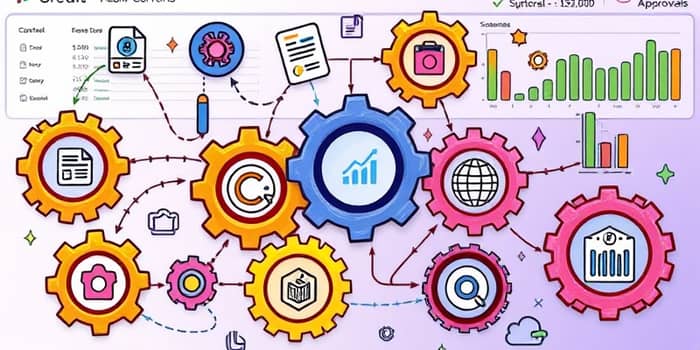
In an era where agility and precision define competitive advantage, mastering your credit workflow is no longer optional—it’s essential. By reimagining how credit is evaluated, approved, and collected, businesses can unlock unparalleled operational efficiency and transform finance teams into strategic powerhouses.
From the moment a customer submits a credit application to the final reconciliation of payments, every step offers an opportunity to reduce risk, accelerate cash flow, and enhance collaboration. This article explores a comprehensive framework, practical tools, and inspiring success strategies to help you achieve true operational optics in your credit processes.
A credit workflow is a systematic series of steps designed to evaluate creditworthiness, manage outstanding balances, and ensure timely collections. By standardizing these activities, organizations maintain consistency, improve compliance, and create clear audit trails.
Each phase is interconnected, ensuring data flows seamlessly and exceptions are flagged immediately. A robust workflow minimizes manual handoffs and frees finance professionals to focus on strategic tasks rather than repetitive data entry.
Despite clear benefits, only 36% of finance teams have achieved full automation. Over half remain in partial states, relying on inconsistent OCR tools and manual intervention. This gap presents a significant opportunity for organizations willing to embrace change.
Implementing automation yields measurable improvements:
By reducing manual effort and errors, organizations unlock faster order-to-cash cycles and brighter financial forecasts. CEOs estimate they can save 20% of their time on financial operations alone.
Modern credit workflows harness a suite of automation tools and AI-driven engines. These technologies integrate seamlessly to create truly end-to-end workflow connections that handle volume, variability, and governance requirements.
These technologies, when integrated into unified platforms, reduce exceptions and manual handoffs, providing teams with the bandwidth to tackle high-value activities like customized risk analysis and relationship-building with key customers.
Effective credit management demands tight coordination between sales, customer service, and finance. When these functions operate in silos, conflicting priorities and data discrepancies can lead to delayed shipments, lost discounts, and strained relationships.
To foster unity, consider these practices:
By fostering cross-functional collaboration strategies, companies ensure that everyone speaks the same language—maximizing sales opportunities while safeguarding cash flow.
Data-driven insights are the heartbeat of continuous improvement. Tracking key performance indicators reveals bottlenecks and guides strategic investments in automation.
Regularly reviewing these metrics empowers teams to celebrate wins, identify trends, and deploy targeted training or technology upgrades where they matter most.
Transforming credit workflows is a journey of continuous refinement. By combining structured frameworks, cutting-edge automation, and a culture of collaboration, you can transform credit operations into strategic assets that fuel growth and resilience.
As the market evolves, organizations that proactively streamline credit processes will enjoy faster cash conversion, tighter risk controls, and empowered finance professionals—hallmarks of sustainable success in today’s dynamic business landscape.
References