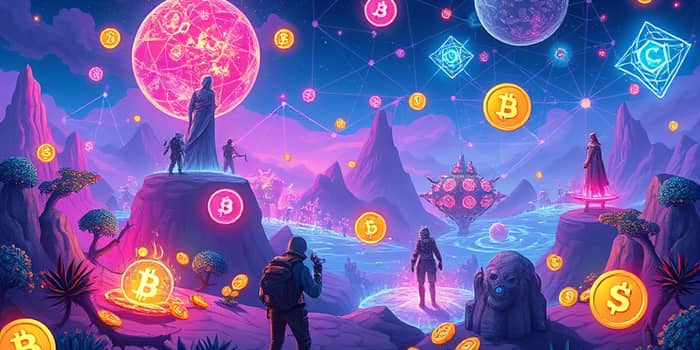
From casual play to professional competition, gaming has evolved into a cultural phenomenon. Now, a new frontier is transforming the way we play, compete, and earn. Welcome to GameFi, where virtual worlds meet real-world value.
By combining blockchain protocols with interactive gameplay, GameFi unlocks unprecedented economic opportunities for players worldwide. It’s a paradigm shift that blurs the line between entertainment and empowerment.
At its core, GameFi fuses three distinct sectors—blockchain, decentralized finance, and traditional gaming—to create ecosystems where every action carries tangible value. Players earn tokens or assets as they complete missions, level up characters, or conquer opponents.
Termed by Andre Cronje of Yearn Finance fame, this concept grew from gamified finance experiments into fully decentralized gaming environments. Today, GameFi offers true ownership of digital assets and transparent reward systems built on smart contracts.
GameFi projects run on public blockchains like Ethereum, Solana, or Binance Smart Chain. Each in-game item—from weapons and outfits to virtual real estate—is minted as an NFT. Token economies drive engagement through play-to-earn and staking mechanisms.
Developers integrate DeFi features directly into gameplay, allowing participants to stake tokens for yields or borrow against NFT collateral. Governance tokens empower communities to vote on game updates through DAOs.
Each model incentivizes different play styles. Some games allow free entry, while others require initial NFT acquisition to access premium content. The diversity of tokenomics fuels a vibrant ecosystem across genres.
GameFi’s rise is more than a trend; it represents a shift in digital culture and economy. Players gain unprecedented control over their digital identities and earnings.
Despite its promise, GameFi faces hurdles that demand careful consideration. Projects vary in quality, token valuations can be volatile, and regulatory frameworks are still catching up.
Looking ahead, GameFi will continue evolving alongside the metaverse, artificial intelligence, and virtual reality. As interoperability standards mature, in-game assets may migrate seamlessly between digital realms.
New financial primitives—like fractional NFT ownership—could make premium assets accessible to a broader audience. Simultaneously, play-to-earn communities are exploring hybrid models that balance entertainment with sustainable economics.
Beyond entertainment, educational initiatives and charitable gaming projects are emerging, directing a portion of rewards toward social causes. This fusion of fun and philanthropy illustrates how GameFi can drive positive impact across sectors.
Ultimately, GameFi is more than a gaming innovation—it’s a movement toward earning real world value through gameplay and collaborative creation. As blockchain adoption spreads, players will shape virtual economies just as they once shaped online worlds.
Whether you’re a seasoned gamer, crypto enthusiast, or curious newcomer, the GameFi universe offers a dynamic playground of opportunity. Dive in, explore ecosystems, and become part of a transformative journey that empowers you every step of the way.
References