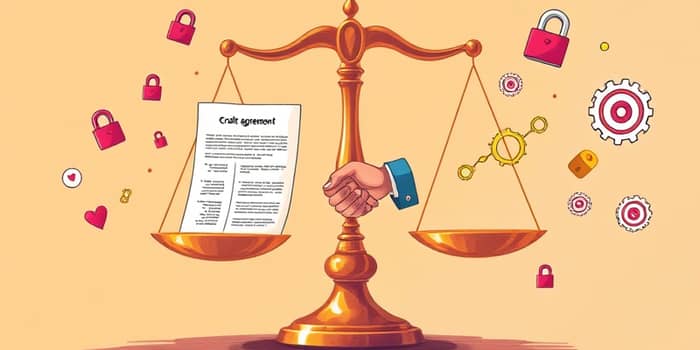
In today’s financial ecosystem, credit decisions reverberate through businesses, communities, and individual lives. When institutions prioritize profit over principle, trust erodes and stability falters. Embedding ethics into every credit judgment transforms transactions into lasting partnerships built on respect, empathy, and mutual benefit.
Financial integrity demands unwavering commitment to fairness, honesty, and accountability, turning each loan application into an opportunity to strengthen relationships and protect all stakeholders.
By understanding common dilemmas, embracing core principles, and deploying practical strategies, lenders and credit professionals can forge an ethical edge. This edge not only mitigates risk but also fuels growth and resilience in an unpredictable market.
Every credit officer encounters moments when business pressures collide with moral duty. These scenarios test the resolve to uphold integrity in the face of short-term gains or corporate targets. By examining real-world dilemmas, professionals can anticipate pitfalls and choose the path that sustains trust for the long haul.
At the heart of every sound credit decision lie fundamental ethical principles. These guidelines transform routine processes into transparent, trustworthy interactions. By codifying them into daily operations, institutions reinforce a culture where integrity is non-negotiable.
Implementing these principles ensures strengthened stakeholder confidence and shields organizations from regulatory and reputational risks. Every team member becomes a guardian of ethical credit practices, reinforcing a shared commitment to doing what is right.
Even the most principled professionals are vulnerable to subconscious biases. Recognizing and mitigating these distortions is crucial to maintain objectivity and fairness in credit judgments.
To embed ethics into the fabric of credit management, organizations must adopt a multifaceted approach. Training, culture, and technology converge to create an ecosystem where integrity thrives and becomes self-reinforcing.
Ethical credit practices create ripples far beyond individual transactions. In the short term, transparent processes and fair treatment build immediate trust with clients and regulators. Over time, this trust solidifies into loyalty, attracting referrals and positioning the organization as a market leader.
Beyond the corporate sphere, ethical credit management fosters broader financial stability. When institutions uniformly uphold integrity, consumer confidence grows and systemic risks diminish. This virtuous cycle reinforces the health of economies and contributes to community well-being.
In a world where credit decisions can shape destinies, ethics must stand at the forefront. By embracing transparency, honesty, and accountability, credit professionals cultivate relationships grounded in trust and resilience.
Choosing integrity is not just a moral choice—it is a strategic advantage. As institutions and individuals commit to building a culture of ethical decision-making, they secure a competitive edge that endures, ensuring sustainable success in every credit journey.
References