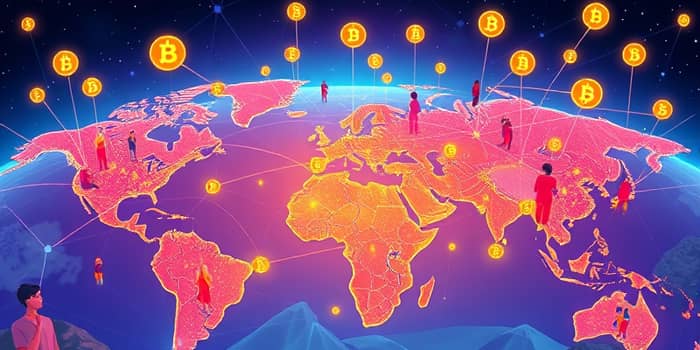
In today’s rapidly evolving financial landscape, decentralized exchanges have emerged as a cornerstone of the cryptocurrency ecosystem. Unlike conventional trading venues, a decentralized exchange (DEX) operates on a blockchain, allowing users to swap digital assets without relying on banks, brokers, or centralized entities. At its core, a DEX is built upon smart contracts—self-executing pieces of code that automate the transfer of tokens between parties. This revolutionary approach paves the way for truly independent trading, where intermediaries are eliminated and control returns to the individual.
By offering a peer-to-peer marketplace without intermediaries, DEXs empower participants with full ownership and transparency. Whether you’re a seasoned trader or a newcomer exploring decentralized finance (DeFi), understanding how these platforms function can unlock new opportunities and enhance your financial sovereignty. This article delves into the architecture, benefits, practical guidance, and future of DEXs, providing you with actionable insights to navigate this dynamic space.
At the heart of every DEX lies a network of smart contracts that handle order execution and settlement directly on the blockchain. These contracts enforce trade conditions, verify balances, and facilitate transfers without any human intervention. Because users maintain their assets in self-custody wallets, the risk of centralized hacks or insolvencies is virtually eliminated. With self-custody secured by smart contracts, traders can interact confidently, knowing that no single entity controls their funds.
There are two principal models of decentralized trading: order book DEXs and automated market makers (AMMs). Order book DEXs post bids and asks on-chain, but require substantial throughput and often suffer from low liquidity. In contrast, AMMs utilize liquidity pools—collections of paired tokens. Traders swap directly against a pool, where prices adjust in real time according to token ratios. This model delivers instant trades and steady liquidity, as algorithms algorithmically manage liquidity pools and reward contributors with a share of transaction fees.
Decentralized exchanges offer a compelling set of benefits that distinguish them from their centralized counterparts. From reduced systemic risk to broader asset access, DEXs are forging a new paradigm of financial inclusion and user empowerment. Below are some of the most significant advantages:
Embarking on your DEX journey is straightforward if you follow a few essential steps. Preparation and security are paramount—ensuring your assets remain safe while you explore decentralized markets:
While DEXs unlock remarkable potential, users must remain aware of inherent risks. Public blockchains expose transactions to potential frontrunning or MEV (maximal extractable value) attacks, and network congestion can drive up fees unpredictably. Moreover, permissionless markets may host low-quality or malicious tokens. By adopting prudent strategies, you can protect your capital:
Understanding how DEXs stack up against centralized exchanges (CEXs) is crucial for selecting the right venue. The following table highlights the core differences, emphasizing why many users choose decentralized alternatives for greater autonomy and resilience.
As blockchain technology progresses, DEXs will continue to integrate advanced features such as cross-chain swaps, on-chain derivatives, and automated limit orders. Governance models will evolve to balance efficiency with community oversight. These innovations promise to extend access to financial services in regions underserved by traditional banking systems, ensuring that global financial inclusion becomes reality for millions.
Whether you seek greater autonomy, wish to explore nascent DeFi projects, or simply prefer transparent, trustless trading, decentralized exchanges offer a path forward. Start small, practice sound risk management, and stay informed—your journey through this transformative landscape can shape your financial future and contribute to the broader evolution of the crypto ecosystem.
References