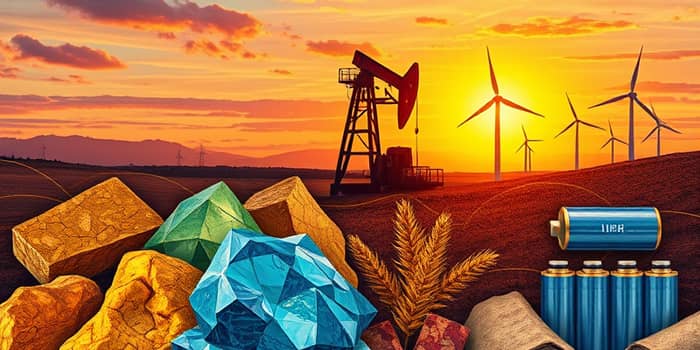
In an era defined by shifting economic tides and technological breakthroughs, the world of commodities stands at a crossroads. Investors seeking to navigate 2026’s volatile market must balance risk, innovation, and opportunity. This guide offers both inspiration and practical tools to harness the potential of raw materials.
The global outlook for 2026 reveals a fundamental divide between optimism and caution. Some analysts foresee a confluence of positive trends driving modest gains, while others warn of subdued industrial growth and ample supply overrunning demand.
Price forecasts vary: the S&P Goldman Sachs Commodity Index anticipates a slight decline, while the World Bank predicts a more pronounced drop. Yet historical context matters—commodity indices delivered robust total returns in 2025, reminding investors that cycles can swing back in surprising ways.
Fossil fuels and renewables coexist in a market at an accelerating energy transition across sectors. Crude oil faces long-term demand headwinds as electric vehicles and clean power systems proliferate, but the need for metals and infrastructure investment paints a more nuanced picture.
Natural gas and precious metals are slated to remain relative outperformers, buoyed by both supply constraints and policy support for cleaner energy. Near-term oil prices may recover in late 2026, but an oversupplied backdrop and weaker Chinese industrial output could cap gains.
Base metals like copper and aluminum are under pressure from persistent supply constraints for industrial metals. Mining project delays, permitting challenges, and geopolitical disputes exacerbate potential shortages.
On the agricultural front, markets have settled after early-decade volatility. Strong harvests, improved logistics, and ample inventories have driven price stability. Yet long-term growth drivers—rising populations, diversifying diets, and biofuel demand—signal renewed opportunity.
Commodity markets are never immune to policy shifts and conflicts. Tariffs on aluminum and copper, China’s rare-earth export restrictions, and the ongoing Russia-Ukraine war premium all introduce volatility. Investors often seek safety in precious metals, with gold and silver rallying on central bank buying and low real interest rates.
Global growth is projected to ease in 2026, creating a “soft patch” that could weigh on demand for energy and metals. At the same time, inflationary pressures and fiscal deficits could underpin safe-haven allocations.
Successful commodity investing demands a disciplined framework. Focus on diversification, risk management, and strategic tilts toward sectors with favorable dynamics.
Adopt sophisticated hedging strategies and partnerships to mitigate price swings. Enhance supply-chain visibility through digital tools and flexible contracts. Seek exposure across energy, industrial metals, agriculture, and precious metals to capture asymmetric return opportunities.
Below is a snapshot of sector outlooks for 2026:
As investment cycles turn, periods of over- and underinvestment cycles can create significant mispricings. Reduced capital expenditure in 2024–2025 may set the stage for tighter supplies and higher prices beyond 2026.
Whether you’re a seasoned fund manager or a private investor, consider these actionable strategies:
In 2026, raw materials and resources will remain at the heart of economic transformation. From the green energy revolution to evolving food demands, commodities offer avenues for growth, diversification, and resilience. By combining a supply-demand imbalances and geopolitical risks awareness with disciplined portfolio construction, investors can navigate uncertainty and unlock lasting value in the decades to come.
References