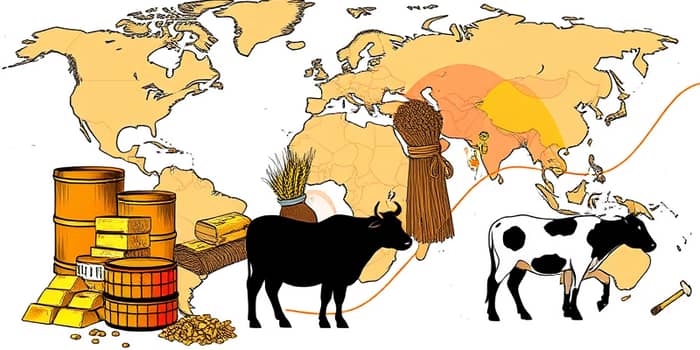
Commodities serve as the essential assets that underpin global trade, investment portfolios, and economic cycles. From energy sources that power industries to grains that feed populations, raw materials hold intrinsic value and offer investors unique opportunities and challenges. This article delves into definitions, market drivers, investment vehicles, sector outlooks for 2026, and integration strategies to help readers navigate the complex world of commodity investing.
At their core, commodities are physical raw materials like energy and agricultural products traded on specialized exchanges. They fall into several major categories, each with its own supply-demand dynamics and price drivers.
Understanding these sectors is the first step toward building a diversified portfolio that can weather inflationary pressures and cyclical shocks.
Commodities move in response to a diverse set of macro and micro forces. Investors must monitor both immediate supply disruptions and long-term structural trends.
Each of these factors can lead to sudden price moves, creating both opportunities and volatility for investors.
Most retail investors gain exposure to commodities without handling physical goods, instead using derivative instruments and pooled vehicles to capture price movements.
Within futures, investors can employ long-only, long-short, trend following, fundamental and arbitrage strategies, each offering distinct risk-return profiles.
When incorporated thoughtfully, commodities provide several portfolio advantages. They often exhibit diversification (low correlation to stocks) and can act as an inflation hedge with positive real returns during price surges. Cyclical shortages may produce alpha, as seen during the 2021-2022 energy surge.
However, investing in commodities also entails significant risks. Price volatility can spike due to oversupply, sudden demand drops, or geopolitical events. Returns are driven by both spot price movements and supply-demand fundamentals and roll yield from futures curve shapes (contango/backwardation). Tariffs and regulatory shifts add layers of uncertainty.
Energy: An oversupplied oil market is expected to exert downward pressure on prices, despite a lingering geopolitical risk premium from the Russia-Ukraine conflict. Natural gas and heating oil benefited from cooler winters in 2025, but abundant U.S. production may soften pricing through mid-2026. Renewables expansion offers a stabilizing long-term demand floor.
Metals: Industrial metals face headwinds from slowing manufacturing and construction activity. U.S. tariffs on aluminum and copper continue to keep premiums elevated, while Chinese restrictions tighten the rare earths supply. Precious metals like gold may attract safe-haven flows if global growth disappoints, but base metals could remain under pressure.
Agriculture: After volatility in the early 2020s, grain markets are entering a period of relative stability. Ample 2025 harvests have weighed on wheat and corn, while rising consumption in emerging markets underpins long-term demand. Soybean oil led 2025 returns, but ongoing supply diversity efforts in China may keep U.S. exports in check.
Livestock: Cattle and hogs contributed positively in 2025, supported by strong protein demand. Feed cost fluctuations and disease risks remain key drivers. Investors should watch breeding cycles and input costs closely for tactical entry points.
Adding commodities can shift an efficient frontier upward. Models like Vanguard’s VAAM and VCMM show that portfolios with a dedicated inflation-linked bucket outperform during price shocks. Tactical allocations capitalize on short-term imbalances—such as the energy squeeze in 2021—while strategic positions hedge against unexpected inflationary spikes.
Managed futures strategies, with their systematic trend signals, can enhance returns and manage drawdowns when equities and bonds are under stress. Combining static and dynamic roll approaches allows investors to harvest curve-shape opportunities beyond simple spot moves.
Throughout history, commodities have reflected the state of global industrialization and consumer preferences. From the spice trade of centuries past to today’s rare earth mineral race, raw materials have shaped geopolitics and economic power. The recent pivot toward clean energy further underscores the critical role of metals like copper, nickel, and lithium.
Looking ahead, investors should balance the long-term secular trends—population growth, urbanization, energy transition—with the shorter-term cycles of supply-demand imbalances and policy shocks. A disciplined, diversified approach to commodities can unlock portfolio resilience and growth potential in an ever-evolving market landscape.
By understanding definitions, market drivers, investment vehicles, sector-specific outlooks, and integration techniques, investors can navigate the commodities market with greater confidence and purpose. Whether seeking an inflation hedge, a source of alpha, or diversification, raw material investments offer a uniquely tangible connection to the global economy’s core.
References