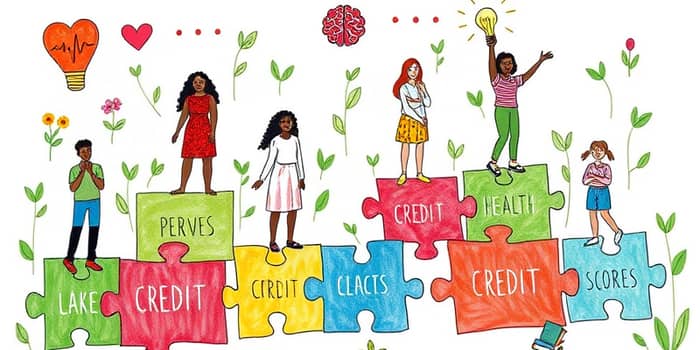
Every time we check our credit, we are witnessing more than just numbers—we see reflections of our journeys, challenges, and aspirations. Our scores are narratives written by our choices, early life experiences, and the support we receive.
Credit intertwines with self-esteem, health, and opportunity, creating an ecosystem that demands empathy, awareness, and action. By exploring the human dimensions behind each score, we can reshape our relationship with money and reclaim our well-being.
Long-term studies, such as the renowned Dunedin cohort, reveal that qualities formed in childhood—like discipline, learning ability, and perseverance—directly predict adult credit behavior. By age 38, individuals with higher educational attainment and stronger self-control not only boasted better scores but also showed lower cardiovascular risk.
These findings underscore that credit is not just about wages or emergencies. It is about the investment in lifelong skills and resilience cultivated from early environments. When we recognize that our upbringing and community resources shape repayment habits, we see opportunities to intervene positively.
Community programs that promote financial literacy, mentorship, and academic support become more than social services—they are strategies to build robust human capital, which translates into healthier credit profiles and richer life outcomes.
Financial pressures trigger powerful emotional responses. Surveys indicate 71% of adults feel their mental health suffers after using credit, while nearly half experience acute stress post-transaction. Anxiety about statements leads many to avoid reviewing balances, creating hidden risks.
Bidirectional research shows that depression, anxiety, or sleep disorders often precede missed payments, while lingering debt exacerbates emotional distress. Student loan borrowers report suicidal thoughts at alarming rates, and users of buy-now-pay-later plans with existing mental health conditions are more prone to impulsive purchases and default.
Addressing these issues requires integrating financial coaching with mental health support, creating safe spaces to discuss money worries and build coping strategies for financial stress before it escalates.
Credit health and bodily health are deeply intertwined. Low scores correlate with an accelerated “heart age” up to 19 months older than peers, independent of income or major life setbacks. Meanwhile, payday loan users exhibit a 38% higher prevalence of poor general health.
Medical bills drive many into credit crises. Over two thirds of those with hospital debt see their scores plummet, limiting future borrowing and even affecting housing opportunities. These cycles persist because credit damage from medical emergencies rarely disappears without targeted intervention.
By acknowledging how financial burdens translate into physical risk, individuals can prioritize preventive care, seek charity programs, and advocate for policies that cap interest rates on medical debt.
Credit systems often mirror deep social inequities. Majority-Black communities aged 25–29 report median scores nearly 100 points below wealthier areas, while hundreds of U.S. counties remain in severe credit insecurity.
Past injustices—redlining, unequal school funding, and discriminatory lending—create self-reinforcing credit market loops that trap families across generations. Even incarceration impacts not only those jailed but their relatives, as credit reports embed these records.
Recognizing these patterns fuels advocacy for fair lending laws, expanded community reinvestment, and transparent scoring models that account for contextual hardships rather than penalize them.
Empowerment begins with awareness. Tracking daily expenses, automating payments, and setting short-term savings goals establish a foundation for positive credit trajectory. Pair these actions with mindfulness practices—journaling, meditation, or talking with trusted peers—to reduce stress-driven financial choices.
On a larger scale, support policies that expand early childhood education, cap interest rates on emergency loans, and integrate credit counseling into mental health services. By embracing both personal and systemic solutions, we foster holistic well-being across financial and personal domains.
Credit need not be a source of shame or fear. By illuminating the human stories behind every score, we can build compassionate communities, enact meaningful reforms, and chart paths to stronger futures—one empowered financial decision at a time.
References